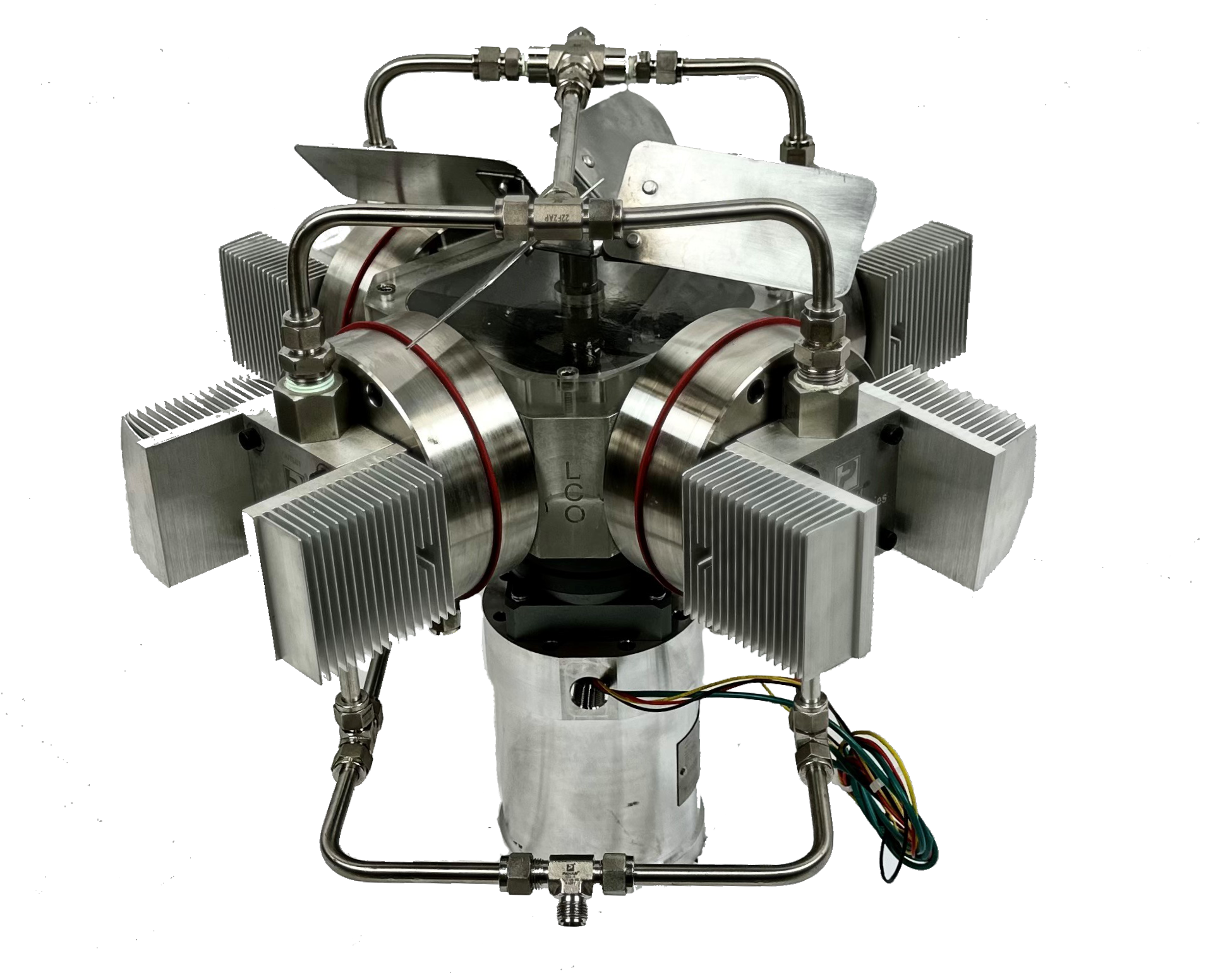
LCO Vapour Recovery Units captured tank emissions, maintained stable pressure control, and prevented atmospheric venting.
Captured tank vapours using LCO VRUs, eliminating methane emissions, preventing venting, and delivering measurable carbon tax and fuel savings while maintaining stable operations.
The Challenge
Oil and gas storage tanks released fugitive methane emissions due to venting of vaporised hydrocarbons during production and storage. The system needed to manage fluctuating pressure and vent rates without creating vacuum or overpressure conditions. Maintaining blanket gas integrity and integrating with existing control systems were also required to ensure safe and stable operation.
The Solution
Two LCO Vapour Recovery Units (VRUs) were installed to capture emissions from production tanks. The system dynamically adjusts to changing pressure and flow conditions, preventing vacuum and overpressure while preserving blanket gas integrity.
The VRUs were integrated with the site’s Allen-Bradley PLC to support coordinated control and consistent operation. Recovered gas is redirected for beneficial use, either as feedstock for heat generation or recompressed for sale, eliminating the need for atmospheric venting.
The Value
Environmental Impact
Methane emissions from tank venting were eliminated, reducing greenhouse gas emissions.
Economic Savings
Operational data indicated that a single unit could have met site requirements, highlighting the importance of aligning capacity with gas volume.
Outcome
Lower gas volumes at this site limited overall optimization potential. Based on results, deployment at higher-volume sites is being considered to maximize value.
Methane emissions from tank venting were eliminated, reducing greenhouse gas emissions.
Economic Savings
- Over $246K in carbon tax savings over 10 years
- Projected annual fuel savings of $7,070 by 2034
- No process upsets following installation
- No vacuum or overpressure conditions observed
- No vented gas post-installation
- Lower than expected waste gas volumes
Operational data indicated that a single unit could have met site requirements, highlighting the importance of aligning capacity with gas volume.
Outcome
Lower gas volumes at this site limited overall optimization potential. Based on results, deployment at higher-volume sites is being considered to maximize value.
Take the Next Step
Connect with a Specialist
Connect with an expert who understands Western Canadian industrial operations.

Explore Secure & Stable Operations
Discover how Spartan helps industrial operations reduce risk, improve reliability, and run predictably.